
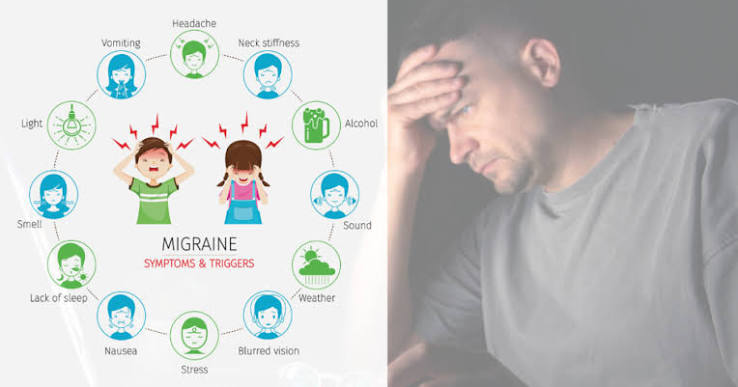
Last updated: August 11, 2026
- This plain-language explanation of what is migraine trigger?
- What a Migraine Trigger Actually Is A migraine trigger is a clue, not a verdict.
- – Trigger: what helps start an attack.
- – Symptom: what the migraine itself feels like.
One skipped lunch, a rough night, and then a migraine. From the outside, that is how it often looks. A migraine trigger is anything that makes a migraine more likely to start in a person who is already prone to them. This plain-language explanation of what is migraine trigger? plain-language explanation focuses on the factor that seems to set off an attack, not the whole condition. Certainty is rare here. People get told to “avoid your triggers,” then end up with half-truths and frustration.
What a Migraine Trigger Actually Is
A migraine trigger is a clue, not a verdict. Event, food, smell, stress, sleep change, hormone shift, weather swing, sensory overload — any of those can seem to tip your brain toward an attack. “Seems” is doing a lot of work. Migraine is a brain condition with its own biology; the trigger is usually the last straw, not the whole story.
That matters because people often think one food caused one attack. Sometimes it did. Sometimes the food showed up in the middle of the chain. Hunger is the classic example: you skip lunch, your body gets stressed, your energy drops, and later you get a migraine. The skipped meal may look like the trigger, but the real picture is bigger.
Honestly, I think the most useful way to define a trigger is this: it is something that lowers your margin of safety. If your migraine threshold is already close to the edge, small changes can push you over; if your threshold is higher that day, the same change may do nothing. Tiny difference. Huge effect.
There is a difference between:
– a true trigger,
– a warning sign,
– and an early symptom.
A warning sign is what happens before the headache phase, like food cravings, neck stiffness, mood changes, or yawning. People often mistake those for triggers because they happen close in time. That can lead to wrong conclusions, like cutting out chocolate when the real pattern was that the migraine had already started to build before the chocolate snack.
If you want the shortest honest answer: a migraine trigger is anything that can help set off an attack, but it usually acts in combination with your current state, not alone.
For a clinical overview, I would trust large medical sources such as the National Institute of Neurological Disorders and Stroke and the American Migraine Foundation. Their patient pages on migraine triggers are worth reading if you want a medical baseline rather than internet folklore. Good place to start.
The Real Difference Between a Trigger and a Cause
Here’s the split: a cause helps explain why a person has migraine at all, while a trigger helps explain why an attack started today.
Underlying causes are tied to brain sensitivity, nerve signaling, and inherited risk. You cannot usually “fix” migraine by removing one trigger the way you might stop a rash by avoiding poison ivy. That is the mistake I see most often in casual advice. It turns migraine into a scavenger hunt for one bad apple, when the condition is usually more complicated than that.
Triggers are personal, too. One person can drink red wine and stay fine. Another gets a migraine every time. One person gets attacks after poor sleep. Another gets attacks after sleeping in too long. Both can be telling the truth.
This is why generic trigger lists are useful only up to a point. They can help you look for patterns, but they can also mislead you into over-restriction. I would be careful about any advice that tells you to cut out a long list of foods all at once. That can make eating harder, create anxiety, and still not solve the problem.
The practical rule I use is simple: if a factor shows up again and again before attacks, it is worth treating as a possible trigger. If it shows up once or twice and the pattern is shaky, it may be coincidence or an early symptom. If you are unsure, consult a clinician or headache specialist before making major changes; headache diaries and pattern review are commonly recommended by the American Migraine Foundation and the Mayo Clinic.
The cleanest way to think about it:
– Cause: why migraine exists as a condition.
– Trigger: what helps start an attack.
– Symptom: what the migraine itself feels like.
That distinction is not just academic. It keeps people from blaming themselves for having triggers in the first place. Nobody chooses to have a nervous system that reacts this way.
Migraine Triggers: The Common Ones and Why They’re Hard to Pin Down
Stress, sleep changes, skipped meals, dehydration, hormonal shifts, bright light, strong smells, weather changes, alcohol, and certain foods — those are the names people hear most often. Real list. Still incomplete. None of them is a universal trigger.
Stress is a perfect example. A migraine may start during a hard week, but stress is rarely the only factor. Sometimes the attack comes when stress finally drops off, which confuses people. That “letdown” migraine is real enough that many clinicians recognize it, and it can make the weekend feel like the enemy.
Sleep changes are another common one. Too little sleep can trigger an attack, but so can sleeping far later than usual. The body seems to like rhythm more than perfection.
Food is where people get into trouble fastest. Some people do have repeatable food triggers. Others blame foods that were present right before the attack but had nothing to do with it. A craving for salty or sweet foods can also be part of the pre-migraine phase, which means the food is there because the migraine is coming, not causing it.
Hormones deserve special mention. For many people, menstrual cycle changes are a major migraine pattern. That is not imagined and not “just stress.” It is a real biologic shift, and it often needs a plan more specific than general lifestyle advice. If migraine seems tied to your cycle, I would talk with a clinician rather than trying to solve it with guesswork.
The hard part? Triggers often stack. A little dehydration, a missed meal, and a noisy room may do nothing alone. Put them together on a bad day, and the attack shows up.
How to Tell Whether Something Is Your Trigger
Memory alone is a bad witness. The brain is good at pattern-making after the fact, and migraine attacks are memorable enough to distort the story.
A trigger diary can help, but only if you use it in a practical way. You are not trying to build a perfect research log. You are trying to answer one question: “What happens often enough before my attacks that I should pay attention?”
Write down:
– what time the attack started,
– what you ate and drank,
– how you slept,
– stress level,
– exercise or exertion,
– weather or light exposure,
– menstrual timing if relevant,
– and any early warning symptoms.
Then look for repetition over several attacks, not one dramatic day. A real trigger tends to appear in the same general pattern more than once. A fake trigger often looks convincing only because the attack was bad and the memory is loud.
I also think it helps to ask two extra questions:
1. Was this present before the migraine began, or did it happen because the migraine was already starting?
2. Is this a single factor, or part of a cluster?
That second question matters more than people expect. If you always get a migraine after a long meeting, the pattern may reflect the meeting plus skipped water, screen exposure, tension, and delayed lunch. In that case, the trigger is the cluster, not one isolated event. Messy, but useful.
One warning: if tracking triggers makes you anxious, you are allowed to simplify. A diary that turns into obsession is not helping. Migraine management should reduce chaos, not add another full-time job.
For evidence-based patient guidance, the American Migraine Foundation, the Mayo Clinic, and the National Institute of Neurological Disorders and Stroke all have solid explanations of migraine patterns and common triggers. I would start there before trusting social media advice.
The Honest Side-by-Side
| Criteria | True Migraine Trigger | Rumored Trigger / Wrong Guess | Winner for daily management |
|---|---|---|---|
| Shows up before attacks more than once | Clear pattern | One-off coincidence | True trigger |
| Helps you prevent attacks | Sometimes, if real | Usually not | True trigger |
| Easy to identify | Often no | Often yes, but misleading | Depends on evidence |
| Risk of over-restricting life | Can be high | Very high | True trigger if confirmed |
| Can be used in a practical plan | Yes | Not safely | True trigger |
| Often confused with early symptoms | Yes | Yes | Neither alone |
| Works the same for everyone | No | No | Neither |
| Useful to test with a diary | Yes | Yes, but cautiously | True trigger |
| May require medical help to manage | Sometimes | Sometimes, if guesswork gets extreme | True trigger |
The honest side-by-side is uncomfortable because it shows how messy this topic is. A “true” trigger is only useful if it is consistent and specific enough to act on. A rumored trigger can waste time, money, and food choices without reducing attacks.
Why Trigger Lists Help Some People and Hurt Others
Trigger lists help when they are used as a starting point. They give you a short menu of common suspects, which is better than wandering blind. They are especially useful if your migraines are new, frequent, or clearly linked to one area of life, like sleep, skipping meals, or hormone changes.
They hurt when they become a rulebook. I have seen too many people eliminate foods, cancel plans, and live in fear of “doing everything wrong” because a list made it sound like migraine is always one bad decision away. That is too rigid. Life gets smaller. The head pain often does not.
So my recommendation is narrow and practical: use trigger lists to look for patterns, not to punish yourself. If a trigger is real, it usually earns its place by repeating. If it only appears once, keep it in mind but do not build your life around it.
This is where professional care can matter. A clinician can help separate migraine from other headache types, review medication use, and look for patterns that are easy to miss. If your attacks are frequent, disabling, or changing, consult a clinician or headache specialist rather than waiting it out.
When to Reconsider This Choice Entirely
Reconsider the whole “trigger hunt” approach if any of these are happening:
- Your list keeps growing, but your migraines are not improving.
- You are cutting more and more foods without clear proof they matter.
- Your headaches are becoming more frequent, more severe, or different in character.
- You are relying on pain medicine often enough that medication use itself could be part of the problem.
- You have new neurologic symptoms, a sudden severe headache, head injury, fever, weakness, confusion, or vision changes that do not fit your usual migraine pattern.
Those are situations where a trigger explanation is not enough. You need medical evaluation, not another app, not another elimination diet, and not another internet checklist. Full stop.
Our Verdict: Which One to Choose and Why
Choose tracking your personal triggers if your migraines have a pattern and you want a practical way to reduce attacks without guessing. Choose medical evaluation and a migraine treatment plan if attacks are frequent, severe, changing, or hard to predict, and consult a clinician if you are unsure which path fits. Neither if you are using trigger hunting to delay care for worsening headaches or to justify extreme food restriction.
That is my call. Trigger awareness is useful, but it is only one piece of migraine care. The goal is not to build a perfect list. The goal is fewer attacks and less fear around the next one.
Quick Answers to Common Questions
Are migraine triggers the same for everyone?
No. Some are common, but each person’s pattern is different.
Can one trigger cause a migraine by itself?
Sometimes, but often it works together with other factors like sleep loss, stress, or skipped meals.
Is chocolate always a migraine trigger?
No. For some people it may be. For others, the craving for chocolate is part of the migraine starting.
Should I avoid all common triggers?
Not automatically. I would only remove or reduce something if you see a repeatable pattern.
When should I talk to a doctor about migraine triggers?
If your headaches are frequent, severe, changing, or disrupting life, or if trigger tracking is making you anxious without helping.
