
Last updated: August 11, 2026
- Most people do not have one trigger; they have 2 or 3 that stack together.
- Stress, sleep, and meal timing are the first 3 triggers to track.
- Hormonal migraine often follows a monthly pattern, especially around menstruation.
- Medication overuse can worsen headache patterns and should be reviewed with a clinician.
- A diary works better than a blanket avoid list for most people.
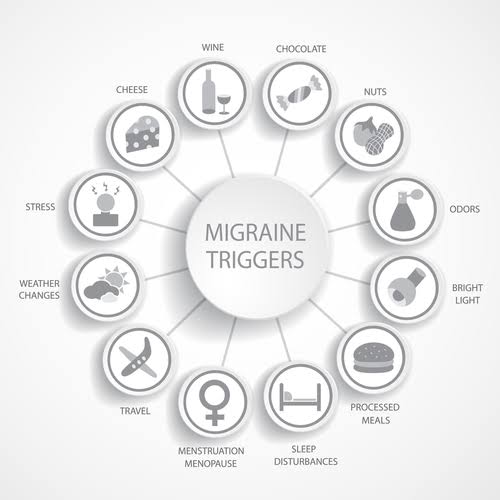
Ten usual suspects. That is the short version. The most common migraine triggers: complete list usually includes stress, sleep changes, missed meals, dehydration, bright light, strong smells, alcohol, hormonal shifts, weather changes, and certain foods. Most of the time, though, the real answer is messier than a neat checklist; migraine triggers are personal, and the job is to find the two or three things that reliably push your brain over the edge.
Migraine and headache care gets written about a lot because people usually do not need a polished definition of migraine. They need a usable map: what to suspect, what to write down, what to leave alone, and when to get medical help. For medical decisions, I would still talk with a clinician — especially if your headaches are new, severe, or changing.
The Most Common Migraine Triggers, Ranked by How Often They Matter
Boring things win here. Annoying? Yes. True? Also yes. In my view, the most common migraine triggers often fall into a few buckets that tend to pile on top of one another:
- Stress and letdown after stress
- Sleep disruption
- Skipped meals or low blood sugar
- Dehydration
- Hormonal changes
- Sensory overload such as bright light, glare, noise, or strong smells
- Alcohol
- Weather and barometric pressure changes
- Certain foods and additives
- Overuse of acute headache medicine
The tricky part is that a trigger is not always one clean event. A migraine may show up after a chain reaction: poor sleep, no breakfast, a rough morning, then fluorescent lights and a meeting that drags on forever. People blame the meeting because that is the last thing they remember; the setup started hours earlier. That math stops working fast.
I think this is where generic advice goes off the rails. It treats triggers like a tidy forbidden list. Real migraine biology is uglier than that, and if you are not sure what applies to you, consult a clinician or headache specialist. One week the wine is fine; the next week it lands on top of dehydration and sleep loss, and the headache shows up anyway. That is why a trigger diary beats any universal “avoid this” list.
For a grounded outside source, I would start with the National Institute of Neurological Disorders and Stroke and the American Migraine Foundation. Both give a solid overview without pretending every trigger affects every person.
What are the most common migraine triggers?
Stress, sleep, and food timing. Those are the core three. They show up so often because they are easy to miss, common in daily life, and capable of dropping your migraine threshold quickly.
Stress is not just “being worried.” Deadlines, conflict, sensory strain, physical tension, and the body’s response after the stress ends all count. Many people get migraines on vacation, over a weekend, or after a major project finishes. That letdown effect is real in ordinary life. So if you only watch for bad days, you miss the rebound days too.
Sleep changes matter in both directions. Too little sleep is a classic trigger, but sleeping much longer than usual can also set one off. Irregular bedtimes can be just as disruptive as short sleep. People who travel, work shifts, parent young children, or go to bed at wildly different hours often learn this the hard way. The downside of sleep advice is obvious: it is hard to fix quickly. The upside is that small schedule tweaks can matter.
Skipped meals and long gaps between eating are another major trigger. Hunger is only part of it. Blood sugar drops, dehydration, and caffeine timing often arrive together. If you are the person who runs on coffee and adrenaline until noon, that is one of the first places I would look.
This section matters most if you are saying, “I can’t find a pattern.” Track these three first before you chase specialty triggers like cheese or weather apps. They are common, and they hide in plain sight.
Food and Drink Triggers: What Actually Deserves Suspicion
Food gets blamed for too much. Honestly, I would not build your whole migraine plan around a giant forbidden-food list unless you already see a clear pattern. The foods worth questioning are the ones that could plausibly affect blood vessels, hormones, or the nervous system, or the ones that show up again and again in trigger reports.
Common suspects include:
- Alcohol, especially red wine for some people
- Caffeinated drinks, if you drink too much, too little, or inconsistently
- Processed meats containing nitrites or nitrates
- Aged cheeses
- Foods with monosodium glutamate (MSG), for people who react to it
- Artificial sweeteners, for a subset of people
- Very salty foods or meals that leave you dehydrated
- Chocolate, though I think this is often a false accusation when the real trigger was pre-migraine cravings or skipped food
Here is the catch: food triggers vary more than people want them to. One person’s culprit may be another person’s nothingburger. I would also be careful not to mix up a craving during the prodrome phase with a trigger. Some people want chocolate, salty food, or caffeine right before a migraine starts, then decide the craving caused it. Backward story. Easy trap.
My practical advice: do not jump into a giant elimination diet unless you have a clear pattern or a clinician tells you to. Start with a diary that records what you ate, when you ate, sleep, hydration, stress, and symptoms. If the same food shows up over and over only in migraine weeks, that matters. If it appears at random, it is probably noise.
For readers who want a professional overview, the Cleveland Clinic and Mayo Clinic both have patient-facing migraine pages that explain common dietary patterns in plain language. I am not linking every source here because I do not want to pretend certainty where there is none; the goal is to keep your evidence base simple and trustworthy.
Hormones, Weather, and Sensory Triggers: The Ones People Dismiss Too Quickly
Many articles flatten this part. They toss out “hormones” and “weather” like side notes. They are not side notes. For plenty of people, they are the whole show.
Hormonal shifts matter especially around menstruation, pregnancy, postpartum changes, perimenopause, and changes in hormonal contraception. Estrogen fluctuation is a common reason headaches become easier to predict by calendar than by meals or sleep. If your migraines cluster around the same days each month, I would look hard at this. The trade-off is that hormone-linked migraine can be difficult to manage on your own, and treatment choices may need medical input, so consult a clinician or headache specialist.
Weather and barometric pressure changes are more divisive in casual conversation than they should be. Some people are extremely sensitive; others are not at all. I would not claim every storm causes a migraine. I would say that if your headaches cluster around weather changes, you are not imagining it, and the pattern is worth tracking. You cannot control the forecast. Obviously. So the useful response is preparation, not guilt.
Sensory triggers include bright sunlight, flashing lights, strong perfume, smoke, loud noise, visual clutter, and screen glare. For migraine-prone brains, these are not “small annoyances.” They can be direct stressors. That is especially true when several inputs stack up in a short window — a long drive, a bright office, and a strong odor from a coworker’s lunch, for example.
If you live with migraine, I would think of these as threshold modifiers. They may not start the attack alone, but they can help shove you over the line when you are already vulnerable.
Medication Overuse and the Trigger Trap Nobody Wants to Hear About
Uncomfortable? Sure. Still worth saying. Frequent use of acute headache medicine can worsen headache patterns over time. That does not mean the medicine is bad; it means the brain can get stuck in a cycle where the rescue tool becomes part of the problem.
This is one of the most common blind spots in migraine conversations because people assume all triggers come from outside the body. They do not. If you are using pain relievers, triptans, or combination headache medicines often, a clinician should help you figure out whether medication overuse headache is part of the picture.
The weak spot in this category is how easy it is to misread. Some people stop medicine too abruptly and get rebound symptoms or renewed attacks. Others hold back too much because they are scared of overuse, so it is worth asking a healthcare professional for guidance. The right answer is not panic; it is a review of how often you are using acute meds and whether preventive treatment would make more sense. For that, talk with a healthcare professional rather than guessing.
The Honest Side-by-Side: Which Triggers Matter Most and Why
| Criteria | Stress, Sleep, Food Timing | Hormones, Weather, Sensory Inputs | Winner for this condition |
|---|---|---|---|
| How often they matter | Very often; these are the first things I suspect | Often, but in a more individual pattern | Stress, Sleep, Food Timing |
| How easy they are to track | Usually easy with a basic diary | Moderate; weather and hormones need more context | Stress, Sleep, Food Timing |
| How easy they are to change | Sometimes difficult, but actionable | Weather is not changeable; hormones may need medical support | Stress, Sleep, Food Timing |
| How often people misread them | Very often, especially sleep and meals | Also often, especially weather | Tie |
| Best for first-week tracking | Yes | Not first | Stress, Sleep, Food Timing |
| Best for monthly pattern headaches | Sometimes | Yes, especially hormones | Hormones, Weather, Sensory Inputs |
| Best clue that the trigger is real | Same pattern repeats across ordinary weeks | Repeated timing around cycles or storms | Tie |
| Biggest downside | Can feel obvious and still be hard to fix | Some parts cannot be controlled at all | Stress, Sleep, Food Timing |
| Most useful next step | Regular sleep, meals, hydration, stress reduction | Pattern tracking and medical review if hormones are involved | Depends on the pattern |
The table is the point. Start with the triggers you can actually observe and influence quickly. Then add the more specific ones if the pattern still does not make sense.
What I Would Track First, and What I Would Ignore at the Start
My recommendation is plain: track the common, fixable triggers before you go hunting for the rare ones.
Start with:
1. Sleep time and sleep quality
2. Meal timing
3. Hydration
4. Stress level or major events
5. Menstrual cycle or hormonal changes, if relevant
6. Alcohol and caffeine
7. Bright light, odor, or screen exposure
8. Weather changes, if you notice a pattern
I would not start by cutting out a dozen foods unless your migraines are frequent and clearly tied to meals. I would also not obsess over one suspicious ingredient after one rough day. Migraine is pattern medicine, not detective fiction. One clue is not a case.
Need a simple rule? Use this: the more common and controllable the trigger, the earlier it belongs in your plan. The more specific and hard to control the trigger, the more evidence you need before you spend energy on it.
Exception Scenarios: When the Usual Advice Flips
Real exceptions exist, and I would rather say that plainly than pretend every migraine follows the same script.
-
If your attacks happen with a monthly rhythm, hormones move to the top of the list, not the bottom. In that case, cycle tracking may matter more than food logging.
-
If you get migraines only after certain foods, every time, food deserves more attention than sleep or stress. The repetition is the key.
-
If your headaches are tied to medication use, the trigger is not the meeting, the weather, or the cheese. Medication overuse needs to be addressed first.
-
If sensory input sets you off quickly, bright light, glare, noise, or smell may be your dominant trigger even if your sleep and meals are decent.
Our Verdict: Which Triggers to Chase First and Why
Choose stress, sleep changes, missed meals, and dehydration if you want the most likely explanation for migraines that seem random, because these are the most common, most actionable triggers. Choose hormones, weather, sensory inputs, and specific food or drink triggers if your headaches follow a repeating pattern that lines up with your cycle, the forecast, or the same exposure every time. Not these, though, if your headaches are new, severe, changing, or accompanied by neurological symptoms — get medical evaluation instead
