Category: Understanding Your Migraine Triggers

  • Why Migraine Triggers Vary From Person to Person

    Last updated: August 11, 2026

    Key Takeaways

    • And that also explains why triggers can shift over time.
    • Why Migraine Triggers Change Over Time Migraine triggers change because your migraine threshold changes.
    • That is why diaries need context.
    • FAQ Why do migraine triggers differ so much between people?

    Quick Answer: Migraine triggers vary from person to person because each migraine brain has a different threshold. Harmless on one day, the same trigger may become a problem the next. That’s the whole wrinkle. In practice, there usually is no single “one-size-fits-all” trigger. Pattern beats isolated food, and why migraine triggers vary from person to person is one reason diaries help some people and not others.

    Key Facts
    – Migraine triggers vary because threshold is personal, not universal.
    – A trigger can be harmless alone but matter when sleep, stress, dehydration, or hormones stack up.
    – The American Headache Society and the National Institute of Neurological Disorders and Stroke both describe migraine as biologically real and individual.
    – A diary works best when attacks are occasional; a treatment review matters more when attacks are frequent, worsening, or changing.
    – Food is often blamed, but sleep loss, hormones, and stress commonly play a bigger role.

    Migraine triggers vary from person to person because migraine brains do not all react to the same pressure point. One person’s attack is set off by skipped meals; another by bright light; another by wine; another by a week of bad sleep. I write about headache and migraine care with a focus on what actually changes decisions, and the useful answer here is blunt: a trigger is usually not the whole cause. It is the last nudge. For a clearer explanation, start with the pattern, not the single food.

    The Real Reason Migraine Triggers Are So Individual

    “My trigger list is weird” is not the real issue. The real issue is personal migraine threshold. That threshold shifts from person to person because the brain’s sensitivity is shaped by genes, hormones, sleep patterns, stress load, medications, and other health conditions. One day a trigger can be harmless; another day, it lands like a hammer.

    So generic trigger advice often misses the mark. A blanket warning about chocolate or cheese can send people after the wrong culprit while the real problem is a missed meal, dehydration, or a change in sleep. Honestly, the most useful way to think about why migraine triggers vary from person to person is this: ordinary things become trouble only when they pile up. A single beer may do nothing on a calm weekend, yet cause trouble after a hard day, poor sleep, and a skipped breakfast.

    And that also explains why triggers can shift over time. A person who once tolerated red wine may stop tolerating it after hormone changes, a new medication, or a stretch of frequent attacks. Migraine is not frozen in place. The threshold moves.

    Treating trigger hunting like a detective story with one clean answer is the common mistake, and that is where a clinician can help. It is more like pressure management. Some people have one strong trigger. Many have a cluster of smaller ones. A few have no obvious trigger at all, at least none they can reliably spot. Weirdly enough, the brain keeps its own bookkeeping.

    If you want a source-backed overview of migraine diagnosis and management, the American Headache Society and the National Institute of Neurological Disorders and Stroke both have solid patient-facing materials. Their general guidance matches what I see in the literature: migraine is biologically real, and trigger patterns are highly individual.

    What Makes One Person Sensitive to Light and Another to Food

    Why Migraine Triggers Vary From Person to Person

    Migraine triggers differ because the nervous system does not process the world the same way in every body. Light, sound, smell, sleep loss, hormones, stress, weather shifts, exercise, and certain foods all work through different pathways. One person may be especially sensitive to sensory input. Another may be more vulnerable to metabolic stress. Another may react most strongly to hormone swings.

    Genes matter here, but not in the simplistic “you inherited migraines so this one food is your villain” way. Family history can raise susceptibility, yet the exact trigger profile still varies. Hormones also matter a lot, especially around menstruation, pregnancy, perimenopause, and menopause. That is one reason some people notice attacks on a predictable cycle while others never do. The same person may also have a different trigger mix at different life stages.

    I’d also separate true triggers from early migraine symptoms. Craving chocolate, for example, can happen during the prodrome, the early phase before the headache. A person may blame chocolate because they ate it before pain hit, when the craving was actually part of the attack already underway. That sort of mix-up makes trigger lists messy fast.

    Stress is another good example. Many people say, “stress gives me migraines,” but the attack often comes after the stress drops, not while the person is in the middle of the crisis. The body’s rebound after tension can be the real issue. That does not make stress less important. It just makes the pattern harder to read.

    A trigger only matters if it predicts something. If a supposed trigger shows up in a diary but never consistently comes before attacks, I’d be skeptical of it.

    Why Migraine Triggers Change Over Time

    Migraine triggers change because your migraine threshold changes. Sleep debt, dehydration, illness, overuse of pain medicine, hormone shifts, more stress, less exercise, and even a change in routine can lower the threshold. When that happens, triggers that were once minor become enough to set off an attack.

    So someone can have a “new trigger” after years of stability. Often, it is not new at all. It has simply started to matter because the system is under more strain. Travel is a classic example. On paper, travel is not a single trigger. In reality, it can bundle several: disrupted sleep, dehydration, missed meals, stronger smells, bright light, and stress. Any one of those may be tolerable alone. Together, they can be too much.

    Medication overuse can muddy the picture too. If someone is using acute headache medicines too often, the headache pattern can become more frequent and less predictable. Then nearly everything seems like a trigger, because the brain is already in a sensitized state. That math stops working fast. This is one reason I would not recommend endless trigger hunting when migraine is getting more frequent. That is the moment to talk with a clinician and review the whole treatment plan.

    Diet triggers get overemphasized online because they feel concrete. Food is visible. Hormones are not. Sleep debt is easy to ignore. Stress is hard to measure. But in many people, the bigger drivers are not the obvious “bad foods.” They are the less glamorous things that lower resilience.

    How to Figure Out Your Triggers Without Chasing Ghosts

    Why Migraine Triggers Vary From Person to Person

    A practical way to figure out why migraine triggers vary from person to person is to look for patterns over time, not one-off coincidences. A migraine diary can help, but only if you track enough context to make the entries meaningful. Write down sleep, missed meals, caffeine, alcohol, stress, menstrual timing if relevant, exercise, weather changes if you notice them, and any medicines taken.

    I would not try to eliminate ten things at once. That usually creates confusion. Instead, look for the few variables that keep showing up before attacks. If the same pattern appears three or four times, it deserves attention. If it appears once, I wouldn’t build a lifestyle around it.

    There is also a trap here: people often focus on the last thing they ate or did before the pain started. Migraine timing can mislead you. The trigger may have happened many hours earlier, and the first symptoms may have been subtle. That is why diaries need context.

    A practical rule: if removing a suspected trigger makes no difference after a fair trial, it is reasonable to stop treating it like a trigger, but a clinician should help if attacks are frequent or the diagnosis is uncertain. Overrestriction can do harm. People end up avoiding normal foods and social events with no real benefit. That can worsen stress, which can itself increase migraine risk. The point is not to live like a monk. The point is to find the few factors that actually change your attack pattern.

    For medically reviewed patient guidance on migraine and headache patterns, I also trust the Mayo Clinic and the National Institute of Neurological Disorders and Stroke as starting points. If the headaches are frequent, severe, or changing, a clinician should help sort out migraine from other headache disorders.

    The Honest Side-by-Side

    Here is the clearest comparison I can give, with the usual caveat that a clinician may recommend a different approach: a trigger diary is useful when your attacks are inconsistent or newly changing; it is less useful when your migraines are already frequent and you need treatment more than pattern-spotting.

    Criteria Trigger Diary / Pattern Tracking Medication- and Treatment-Focused Review Winner for [condition]
    Best for finding personal patterns Strong. Helps link attacks to sleep, food, stress, hormones, and routine shifts. Indirect. Helps only if the medication pattern itself is part of the problem. Diary, when attacks are irregular
    Best for frequent migraine Limited. More data can still leave you stuck. Better. Frequent attacks often need a plan change, not more guesswork. Treatment review, when attacks are frequent
    Risk of overrestriction Higher. People may cut foods or activities that are not true triggers. Lower. Focus stays on actual care needs. Treatment review, when anxiety is high
    Useful for hormone-linked migraine Very useful if you track cycle timing. Useful if you need targeted prevention around high-risk times. Both, depending on pattern
    Useful for diet-related suspicion Useful, but only if you watch for repeated timing. Less direct. Diary, when food is the main question
    Works when life is chaotic Often poorly, because missed entries blur the picture. Better, because it does not depend on perfect tracking. Treatment review, during stress or travel
    Risk of missing a medical issue Moderate if you assume every headache is “just migraine.” Lower if a clinician reassesses the diagnosis. Treatment review, when symptoms change
    Best use case Spotting patterns in otherwise stable migraine. Reassessing care when migraine is frequent, worsening, or hard to read. Depends on the condition

    My view is that the diary wins early and the treatment review wins later. People often stay too long in the diary phase, as if better logging will solve a problem that actually needs medical adjustment.

    Which Migraine Trigger Strategy Actually Helps

    Use trigger tracking as a tool, not a belief system. If you are having occasional migraines and you still have clear windows between attacks, tracking can help you identify a real pattern. If your migraines are happening often, getting more severe, or changing in character, I would put more energy into treatment review than into eliminating foods.

    The reason is simple. Triggers matter, but migraine is a neurologic disorder, not a moral puzzle. Cutting out everything “possible” is a bad trade if it makes your life smaller without reducing attacks. The goal is fewer migraines, not a perfect diary.

    For many people, the right approach is a short list:
    – regular meals
    – consistent sleep
    – enough fluids
    – attention to hormonal timing if relevant
    – stress management that is realistic, not idealized
    – a sensible plan for acute and preventive treatment

    That last point matters. If a migraine pattern is getting worse, no amount of trigger sleuthing replaces proper treatment. A clinician can help decide whether you need better acute medicine, prevention, or a reassessment of whether the headaches are actually migraine.

    I would especially reconsider a trigger-only approach if you are avoiding many foods, feeling anxious about every meal, or still having frequent attacks despite careful tracking. At that point, the method is costing more than it returns.

    Exception Scenarios: When the Overall Answer Flips

    There are a few situations where I would flip the usual advice and make trigger hunting the priority.

    First, if a person has a very clear, repeated trigger pattern, such as attacks that reliably follow a specific hormone window, a predictable sleep disruption, or a particular exposure, then targeting that trigger can be the fastest win.

    Second, if attacks are rare but intense, tracking may be more useful than changing medication right away, because the goal is to prevent the few attacks you do get.

    Third, if symptoms are changing, or if the headache is different from the person’s usual migraine, I would stop talking about triggers and get medical review. A new pattern deserves a fresh diagnosis.

    Fourth, if someone has already tried sensible lifestyle changes and still has regular attacks, trigger focus should give way to a broader treatment plan. More logs will not fix an undertreated migraine disorder.

    FAQ

    Why do migraine triggers differ so much between people?

    Because each person’s migraine threshold is different. Genes, hormones, sleep, stress, medications, and other health factors all change what the brain can tolerate.

    Can one trigger cause migraines by itself?

    Yes, but often it is part of a stack. One trigger may be enough on a day when your threshold is already low.

    Are food triggers real?

    Sometimes, yes. But food is also easy to blame when the real trigger is sleep loss, stress, dehydration, or the early phase of a migraine already starting.

    Should I keep a migraine diary?

    Yes, if your attacks are not too frequent and you can track patterns honestly. If migraines are frequent or changing, pair tracking with a medical review.

    When should I stop focusing on triggers?

    When the diary is not revealing clear patterns, when attacks are becoming frequent, or when you are restricting your life without getting fewer migraines.

  • What Is a Migraine Trigger? A Plain-Language Explanation

    Last updated: August 11, 2026

    Key Takeaways

    • This plain-language explanation of what is migraine trigger?
    • What a Migraine Trigger Actually Is A migraine trigger is a clue, not a verdict.
    • – Trigger: what helps start an attack.
    • – Symptom: what the migraine itself feels like.

    One skipped lunch, a rough night, and then a migraine. From the outside, that is how it often looks. A migraine trigger is anything that makes a migraine more likely to start in a person who is already prone to them. This plain-language explanation of what is migraine trigger? plain-language explanation focuses on the factor that seems to set off an attack, not the whole condition. Certainty is rare here. People get told to “avoid your triggers,” then end up with half-truths and frustration.

    What a Migraine Trigger Actually Is

    A migraine trigger is a clue, not a verdict. Event, food, smell, stress, sleep change, hormone shift, weather swing, sensory overload — any of those can seem to tip your brain toward an attack. “Seems” is doing a lot of work. Migraine is a brain condition with its own biology; the trigger is usually the last straw, not the whole story.

    That matters because people often think one food caused one attack. Sometimes it did. Sometimes the food showed up in the middle of the chain. Hunger is the classic example: you skip lunch, your body gets stressed, your energy drops, and later you get a migraine. The skipped meal may look like the trigger, but the real picture is bigger.

    Honestly, I think the most useful way to define a trigger is this: it is something that lowers your margin of safety. If your migraine threshold is already close to the edge, small changes can push you over; if your threshold is higher that day, the same change may do nothing. Tiny difference. Huge effect.

    There is a difference between:
    – a true trigger,
    – a warning sign,
    – and an early symptom.

    A warning sign is what happens before the headache phase, like food cravings, neck stiffness, mood changes, or yawning. People often mistake those for triggers because they happen close in time. That can lead to wrong conclusions, like cutting out chocolate when the real pattern was that the migraine had already started to build before the chocolate snack.

    If you want the shortest honest answer: a migraine trigger is anything that can help set off an attack, but it usually acts in combination with your current state, not alone.

    For a clinical overview, I would trust large medical sources such as the National Institute of Neurological Disorders and Stroke and the American Migraine Foundation. Their patient pages on migraine triggers are worth reading if you want a medical baseline rather than internet folklore. Good place to start.

    The Real Difference Between a Trigger and a Cause

    What Is a Migraine Trigger? A Plain-Language Explanation

    Here’s the split: a cause helps explain why a person has migraine at all, while a trigger helps explain why an attack started today.

    Underlying causes are tied to brain sensitivity, nerve signaling, and inherited risk. You cannot usually “fix” migraine by removing one trigger the way you might stop a rash by avoiding poison ivy. That is the mistake I see most often in casual advice. It turns migraine into a scavenger hunt for one bad apple, when the condition is usually more complicated than that.

    Triggers are personal, too. One person can drink red wine and stay fine. Another gets a migraine every time. One person gets attacks after poor sleep. Another gets attacks after sleeping in too long. Both can be telling the truth.

    This is why generic trigger lists are useful only up to a point. They can help you look for patterns, but they can also mislead you into over-restriction. I would be careful about any advice that tells you to cut out a long list of foods all at once. That can make eating harder, create anxiety, and still not solve the problem.

    The practical rule I use is simple: if a factor shows up again and again before attacks, it is worth treating as a possible trigger. If it shows up once or twice and the pattern is shaky, it may be coincidence or an early symptom. If you are unsure, consult a clinician or headache specialist before making major changes; headache diaries and pattern review are commonly recommended by the American Migraine Foundation and the Mayo Clinic.

    The cleanest way to think about it:
    Cause: why migraine exists as a condition.
    Trigger: what helps start an attack.
    Symptom: what the migraine itself feels like.

    That distinction is not just academic. It keeps people from blaming themselves for having triggers in the first place. Nobody chooses to have a nervous system that reacts this way.

    Migraine Triggers: The Common Ones and Why They’re Hard to Pin Down

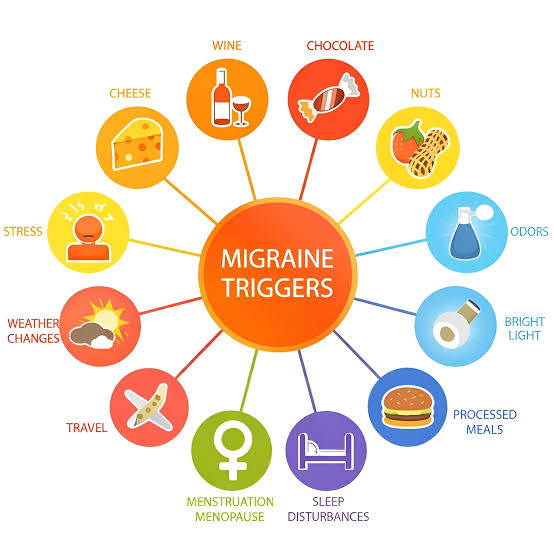
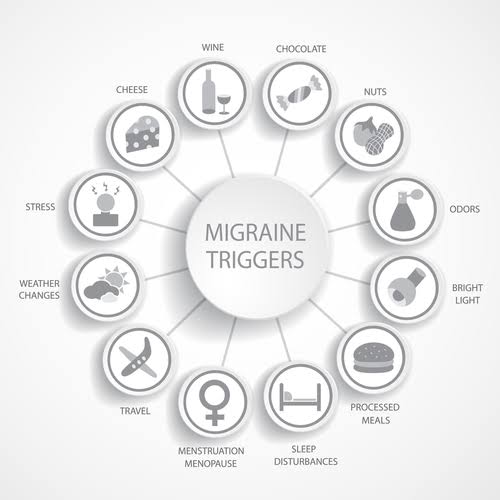
    Stress, sleep changes, skipped meals, dehydration, hormonal shifts, bright light, strong smells, weather changes, alcohol, and certain foods — those are the names people hear most often. Real list. Still incomplete. None of them is a universal trigger.

    Stress is a perfect example. A migraine may start during a hard week, but stress is rarely the only factor. Sometimes the attack comes when stress finally drops off, which confuses people. That “letdown” migraine is real enough that many clinicians recognize it, and it can make the weekend feel like the enemy.

    Sleep changes are another common one. Too little sleep can trigger an attack, but so can sleeping far later than usual. The body seems to like rhythm more than perfection.

    Food is where people get into trouble fastest. Some people do have repeatable food triggers. Others blame foods that were present right before the attack but had nothing to do with it. A craving for salty or sweet foods can also be part of the pre-migraine phase, which means the food is there because the migraine is coming, not causing it.

    Hormones deserve special mention. For many people, menstrual cycle changes are a major migraine pattern. That is not imagined and not “just stress.” It is a real biologic shift, and it often needs a plan more specific than general lifestyle advice. If migraine seems tied to your cycle, I would talk with a clinician rather than trying to solve it with guesswork.

    The hard part? Triggers often stack. A little dehydration, a missed meal, and a noisy room may do nothing alone. Put them together on a bad day, and the attack shows up.

    How to Tell Whether Something Is Your Trigger

    What Is a Migraine Trigger? A Plain-Language Explanation

    Memory alone is a bad witness. The brain is good at pattern-making after the fact, and migraine attacks are memorable enough to distort the story.

    A trigger diary can help, but only if you use it in a practical way. You are not trying to build a perfect research log. You are trying to answer one question: “What happens often enough before my attacks that I should pay attention?”

    Write down:
    – what time the attack started,
    – what you ate and drank,
    – how you slept,
    – stress level,
    – exercise or exertion,
    – weather or light exposure,
    – menstrual timing if relevant,
    – and any early warning symptoms.

    Then look for repetition over several attacks, not one dramatic day. A real trigger tends to appear in the same general pattern more than once. A fake trigger often looks convincing only because the attack was bad and the memory is loud.

    I also think it helps to ask two extra questions:
    1. Was this present before the migraine began, or did it happen because the migraine was already starting?
    2. Is this a single factor, or part of a cluster?

    That second question matters more than people expect. If you always get a migraine after a long meeting, the pattern may reflect the meeting plus skipped water, screen exposure, tension, and delayed lunch. In that case, the trigger is the cluster, not one isolated event. Messy, but useful.

    One warning: if tracking triggers makes you anxious, you are allowed to simplify. A diary that turns into obsession is not helping. Migraine management should reduce chaos, not add another full-time job.

    For evidence-based patient guidance, the American Migraine Foundation, the Mayo Clinic, and the National Institute of Neurological Disorders and Stroke all have solid explanations of migraine patterns and common triggers. I would start there before trusting social media advice.

    The Honest Side-by-Side

    Criteria True Migraine Trigger Rumored Trigger / Wrong Guess Winner for daily management
    Shows up before attacks more than once Clear pattern One-off coincidence True trigger
    Helps you prevent attacks Sometimes, if real Usually not True trigger
    Easy to identify Often no Often yes, but misleading Depends on evidence
    Risk of over-restricting life Can be high Very high True trigger if confirmed
    Can be used in a practical plan Yes Not safely True trigger
    Often confused with early symptoms Yes Yes Neither alone
    Works the same for everyone No No Neither
    Useful to test with a diary Yes Yes, but cautiously True trigger
    May require medical help to manage Sometimes Sometimes, if guesswork gets extreme True trigger

    The honest side-by-side is uncomfortable because it shows how messy this topic is. A “true” trigger is only useful if it is consistent and specific enough to act on. A rumored trigger can waste time, money, and food choices without reducing attacks.

    Why Trigger Lists Help Some People and Hurt Others

    Trigger lists help when they are used as a starting point. They give you a short menu of common suspects, which is better than wandering blind. They are especially useful if your migraines are new, frequent, or clearly linked to one area of life, like sleep, skipping meals, or hormone changes.

    They hurt when they become a rulebook. I have seen too many people eliminate foods, cancel plans, and live in fear of “doing everything wrong” because a list made it sound like migraine is always one bad decision away. That is too rigid. Life gets smaller. The head pain often does not.

    So my recommendation is narrow and practical: use trigger lists to look for patterns, not to punish yourself. If a trigger is real, it usually earns its place by repeating. If it only appears once, keep it in mind but do not build your life around it.

    This is where professional care can matter. A clinician can help separate migraine from other headache types, review medication use, and look for patterns that are easy to miss. If your attacks are frequent, disabling, or changing, consult a clinician or headache specialist rather than waiting it out.

    When to Reconsider This Choice Entirely

    Reconsider the whole “trigger hunt” approach if any of these are happening:

    • Your list keeps growing, but your migraines are not improving.
    • You are cutting more and more foods without clear proof they matter.
    • Your headaches are becoming more frequent, more severe, or different in character.
    • You are relying on pain medicine often enough that medication use itself could be part of the problem.
    • You have new neurologic symptoms, a sudden severe headache, head injury, fever, weakness, confusion, or vision changes that do not fit your usual migraine pattern.

    Those are situations where a trigger explanation is not enough. You need medical evaluation, not another app, not another elimination diet, and not another internet checklist. Full stop.

    Our Verdict: Which One to Choose and Why

    Choose tracking your personal triggers if your migraines have a pattern and you want a practical way to reduce attacks without guessing. Choose medical evaluation and a migraine treatment plan if attacks are frequent, severe, changing, or hard to predict, and consult a clinician if you are unsure which path fits. Neither if you are using trigger hunting to delay care for worsening headaches or to justify extreme food restriction.

    That is my call. Trigger awareness is useful, but it is only one piece of migraine care. The goal is not to build a perfect list. The goal is fewer attacks and less fear around the next one.

    Quick Answers to Common Questions

    Are migraine triggers the same for everyone?

    No. Some are common, but each person’s pattern is different.

    Can one trigger cause a migraine by itself?

    Sometimes, but often it works together with other factors like sleep loss, stress, or skipped meals.

    Is chocolate always a migraine trigger?

    No. For some people it may be. For others, the craving for chocolate is part of the migraine starting.

    Should I avoid all common triggers?

    Not automatically. I would only remove or reduce something if you see a repeatable pattern.

    When should I talk to a doctor about migraine triggers?

    If your headaches are frequent, severe, changing, or disrupting life, or if trigger tracking is making you anxious without helping.

  • Understanding Your Migraine Triggers — The Complete Guide

    Last updated: August 11, 2026

    Key Takeaways

    • What happened in the 24 hours before it?
    • Migraine triggers usually arrive as a stack, not a lone switch.
    • Key Facts – Migraine triggers are usually patterns, not single causes .
    • – A simple log works better than a perfect spreadsheet.

    Quick Answer: For many readers, understanding your migraine triggers — complete guide means tracking about 7 common factors for 2 weeks and looking for repeated patterns, not one perfect culprit. The fastest way to get a handle on migraine triggers is simple: stop hunting for a single magic culprit and start spotting your personal trigger pattern. Migraine triggers usually arrive as a stack, not a lone switch. One short night, a skipped meal, hormone shifts, bright light, alcohol, stress, and dehydration can all pile up into an attack.

    Key Facts
    – Migraine triggers are usually patterns, not single causes.
    – A simple log works better than a perfect spreadsheet.
    – Sleep, meals, hydration, stress, hormones, and sensory overload are common trigger categories.
    – Trigger avoidance has limits, so the goal is risk reduction, not zero risk.
    – A 2-week tracking window is enough to start seeing repeating patterns.

    I write about headache and migraine care for readers who are tired of vague advice and want something they can actually use. Heard this before? “I know something set this off, but I can’t tell what.” Then this understanding your migraine triggers — complete guide is for you.

    What Migraine Triggers Really Are

    Migraine triggers are factors that make an attack more likely in someone who already has a migraine brain. This distinction matters. They are not the same as root causes. Migraine is a neurological condition; a trigger is one of the things that can lower your threshold and bring on symptoms.

    And this is where a lot of generic articles go sideways. They list triggers as though every person with migraine reacts the same way. They do not. One person’s major trigger may be nothing for someone else. Some people also notice “triggers” that are really early warning signs. For example, craving sweets, yawning, neck stiffness, or mood changes can happen before the headache phase starts. People sometimes blame the sandwich they ate an hour ago when the real migraine was already underway. That mix-up is common.

    The practical goal is not to become a detective for one perfect answer. It is to identify your most reliable patterns so you can reduce attack frequency, spot risky combinations, and make better decisions on high-risk days.

    A second thing I want to say plainly: trigger avoidance has limits. You cannot live in a bubble, and you should not build your life around fear. Honestly, the best trigger plan is usually the one that helps without making you anxious, isolated, or nutritionally restricted. Too much caution can boomerang.

    For broader patient-facing guidance, I’d start with the American Migraine Foundation and the National Institute of Neurological Disorders and Stroke:
    – American Migraine Foundation: https://americanmigrainefoundation.org/resource-library/
    – NINDS Migraine information: https://www.ninds.nih.gov/health-information/disorders/migraine

    The Most Common Migraine Triggers, and Why They Matter

    Understanding Your Migraine Triggers — The Complete Guide

    The most useful trigger list is the one that helps you notice patterns, not the one that overwhelms you. To begin, I’d start with the triggers that show up again and again in migraine care: sleep disruption, skipped meals, dehydration, stress letdown, alcohol, hormonal changes, sensory overload, weather shifts, and certain odors.

    Sleep changes

    Too little sleep can do it. So can too much. The real issue is often inconsistency. A late Friday and a long lie-in on Saturday can be enough to knock some people’s migraine threshold off balance.

    Skipped meals and blood sugar swings

    Going too long without eating is a classic trigger. So is eating irregularly. This does not mean every migraine is “from low blood sugar,” but the brain tends to dislike missed fuel. I’d watch this especially if your attacks cluster on busy workdays, travel days, or after morning coffee without breakfast.

    Dehydration

    Mild dehydration can be enough for some people, especially when it combines with heat, exercise, or caffeine changes. The catch? Thirst is not always obvious before the migraine starts for many people.

    Stress and stress letdown

    Stress is among the most common migraine companions, but here’s the twist: attacks often happen when stress drops, not only when it rises. A deadline, a family crisis, or a tense week can set the stage. Then the migraine arrives on the day off or the first quiet evening.

    Alcohol

    Alcohol is a common trigger, but it is not universal. Red wine gets a lot of blame, though the real pattern may be the alcohol itself, the sleep disruption that follows, or the missed meal that came before it.

    Hormonal changes

    For many people, estrogen shifts matter more than single foods do. Menstrual migraine is a major pattern, and attacks may happen predictably around a cycle. This stands as one of the strongest examples of a trigger you may not be able to remove, only plan around.

    Sensory overload

    Bright light, glare, loud environments, strong smells, flickering screens, and crowded spaces can all push a sensitive nervous system toward migraine. This matters especially if your job or daily routine keeps you in high-stimulation settings. Like sand in a gear, it can wear you down fast.

    Weather and barometric pressure changes

    Some people notice attacks around storms, heat, humidity, or pressure shifts. The evidence here is less tidy than with sleep or meals, but the pattern is real enough for many sufferers that I wouldn’t brush it off.

    Foods

    Food triggers exist, but they are usually less universal than the internet suggests. A long list of “forbidden” foods often creates unnecessary restriction. If food seems involved, I would look for repeated patterns, not one-off guesses.

    How to Find Your Personal Triggers Without Going Crazy

    This is the section I wish more migraine articles spent time on. The real skill is pattern-finding. You are not trying to prove one dramatic cause. You are trying to learn your own threshold.

    I recommend a simple, low-friction migraine log. Not a perfect spreadsheet. Not a homework assignment. Just enough to answer a few questions: When did the migraine start? What happened in the 24 hours before it? Did I sleep differently, skip meals, drink alcohol, get dehydrated, have my period, travel, fight, overwork, or spend hours in bright light?

    A good log has two virtues: it is specific and sustainable. If it takes twenty minutes a day, you will stop doing it. If it takes one minute, you may keep it going long enough to learn something. That’s the trade-off.

    Here is the kind of detail that matters:
    – sleep length and quality
    – meal timing
    – hydration
    – caffeine amount and timing
    – stress level and major stress changes
    – menstrual timing, if relevant
    – alcohol
    – exercise
    – screen time, glare, or bright light exposure
    – odors, smoke, or chemical exposure
    – weather changes if you suspect them

    What I would not do is tear apart every meal for mythical trigger foods. That route often leads to fear-based eating. If you suspect food is involved, use a short, targeted experiment with a clinician’s guidance rather than a permanent long avoidance list.

    A useful pattern is this: if the same factor shows up before attacks several times in a row, it deserves attention. If it appears once or twice with no clear pattern, it may just be noise. Many migraine triggers work by stacking, so a minor issue only matters when other factors are already in place.

    One honest limitation is that trigger tracking will not always give you a clean answer. This is normal. Migraine can be influenced by multiple variables at once, and some attacks start without any obvious prelude.

    The Honest Side-by-Side: What Helps Most, and What Can Backfire

    Understanding Your Migraine Triggers — The Complete Guide

    The real choice is not “avoid everything” versus “ignore triggers.” It is between broad, practical trigger management and narrow, over-restrictive trigger hunting. Broad management wins for most people because it lowers attack risk without turning life into a laboratory.

    Criteria Broad trigger management Strict trigger hunting Winner for
    Ease of following Simple habits: regular sleep, meals, hydration, stress planning Can become complex fast, especially with food rules and constant checking Busy people who need sustainable changes
    Risk of over-restriction Lower, because the focus stays on patterns with broad benefit Higher, because any suspected food or activity can become “forbidden” People prone to anxiety around symptoms
    Best use of effort Targets high-yield factors like sleep, meals, and hydration Useful when one very specific trigger keeps repeating Most migraine patients
    How fast it can help Can reduce attack risk over time, though not overnight May help quickly if a clear trigger is removed People with one obvious, repeatable trigger
    Emotional cost Usually lower; less guilt and fewer “I blew it” days Can create hypervigilance and blame People who want less stress, not more
    Fit for hormonal migraine Helps with support factors but cannot remove the cycle itself Often limited, because hormones are not a removable trigger People with menstrual migraine
    Fit for lifestyle triggers Strong, because routine disruptions are often the real problem Sometimes too narrow to catch stacking effects Travelers, shift workers, parents of young children
    Chance of missing the real pattern Moderate, if the plan is too generic High, if you focus on one suspected food and miss sleep or stress People who keep “chasing” the wrong trigger

    My view is straightforward: broad trigger management should be the default. Strict trigger hunting should be reserved for a clearly repeatable pattern, and even then only for a limited, thoughtful trial. The downside of broad management is that it can feel less dramatic. The upside is that it usually helps more than obsessing over one item on your plate.

    The Real Difference Between Trigger Avoidance and Trigger Tolerance

    The real difference is not how hard you try. It is how much room your nervous system has before it tips into migraine. Some people have a wide buffer. Others have a narrow one. Trigger tolerance changes with sleep debt, stress, hormones, illness, travel, and even medication overuse.

    This is why the same trigger can matter one week and not the next. A glass of wine on a rested, calm Saturday may be fine. The same drink after a short night, skipped lunch, and a long day in fluorescent light may not be fine at all.

    I think this is the most important concept for readers to understand: triggers are often conditional. They do not act in isolation. They combine.

    That means the goal is not zero exposure to every possible trigger. The goal is to lower the number of stacked pressures on a given day. For example:
    – if you slept badly, protect meals and hydration
    – if you are on your cycle, avoid adding another major stressor if you can help it
    – if you know bright light bothers you, bring sunglasses or adjust screen settings before symptoms start
    – if travel usually sets you off, plan snacks, water, and a realistic sleep window

    This section matters because a lot of people blame themselves for “doing something wrong” when they still get a migraine after careful trigger avoidance. That reaction is understandable, but it is unfair. A trigger plan lowers risk; it does not eliminate it.

    If you want a trigger plan that holds up in real life, use the National Headache Foundation’s patient education and the American Migraine Foundation’s practical resources as a cross-check against internet folklore:
    – National Headache Foundation: https://headaches.org/
    – American Migraine Foundation: https://americanmigrainefoundation.org/resource-library/

    Which Trigger Strategy Actually Works Best for Most People

    The best strategy for most people is this: build a boring, repeatable baseline first, then test one specific suspect at a time. I’d choose that over a giant elimination diet, a stack of supplements with unclear payoff, or endless internet diagnosis.

    Why this works:
    – It addresses the most common high-yield triggers first.
    – It reduces false alarms.
    – It makes it easier to tell whether a change helped.
    – It avoids the trap of overreacting to one bad day.

    Here is the order I would use:
    1. stabilize sleep as much as your life allows
    2. avoid skipped meals
    3. hydrate consistently
    4. watch caffeine timing and quantity
    5. plan for stress letdown
    6. note menstrual timing, if relevant
    7. identify one or two sensory triggers
    8. only then test a food trigger if the pattern is still convincing

    The weakness of this approach is that it can feel slow. People want a single answer, and migraine rarely gives one. But slow is not the same as ineffective. In practice, a steadier baseline often does more than aggressive avoidance. Sometimes that plain boring routine is the whole trick.

    This is also where I would urge caution with supplement and diet promises. Some people do benefit from magnesium, riboflavin, or other preventive strategies under a clinician’s advice, but those are management tools, not proof that you have found your trigger. If you are considering supplements or prescription prevention, consult a healthcare professional or headache specialist, especially if attacks are frequent or disabling. The American Headache Society discusses preventive options and evidence-based care at https://americanheadachesociety.org/.

    A reliable trigger plan should make your life easier, not smaller. If your plan is forcing you to fear every meal, cancel plans constantly, or assume every headache is your fault, it has gone too far.

    When to Reconsider This Choice Entirely

    Sometimes trigger hunting is not the right next step. I’d rethink the whole approach if any of these are true:

    1. Your headaches are changing shape. If the pattern becomes more frequent, more severe, or different from your usual migraine, get evaluated. New neurological symptoms deserve medical attention.

    2. You are getting headaches often enough that prevention matters more than detective work. If migraines are recurring regularly, the problem may be bigger than triggers alone. A clinician can help you discuss preventive treatment, and the National Institute of Neurological Disorders and Stroke notes that preventive strategies may be needed when migraines are frequent. https://www.ninds.nih.gov/health-information/disorders/migraine

    3. You are stuck in a food-restriction spiral. If your diet is shrinking and your anxiety is growing, stop and reset. That pattern can create more harm than help.

    4. Your “triggers” only appear after the headache has already started. If the suspect food, smell, or stressor shows up after the first migraine signs, it may not be the trigger at all.

    That last point is a common trap. Migraine prodrome can make you act differently before the pain phase. You may crave sugar, seek certain foods, feel irritable, or feel off. Those changes are real, but they are not always causes.

    The main reason to step back is simple: not every headache problem is a trigger problem. Some need diagnosis, prevention, medication review, sleep evaluation, or treatment for another condition. That is especially true if you use acute migraine medicine often enough that rebound or medication-overuse headache becomes a concern. A clinician can help sort that out.

    Exception Scenarios: When the Verdict Flips

    There are a few cases where I would flip the usual advice and focus more narrowly.

    1. You have one clearly repeatable trigger

    If every attack follows the same pattern — for example, a specific exposure that shows up again and again with clean timing — a focused avoidance trial makes sense. I would still keep the trial time-limited and sensible.

    2. You have menstrual migraine

    Hormones are such a strong driver for some people that the best plan is not trigger hunting in the usual sense. I would focus on cycle tracking, anticipatory planning, and a clinician-guided prevention strategy if needed.

    3. You work in a setting with fixed sensory overload

    If your job puts you under bright light, loud noise, or smell exposure every day, environmental changes may matter more than food tracking. This is a case where practical accommodations can beat broad lifestyle advice.

    4. You are in a high-stress life season

    During grief, caregiving, exams, a move, or a major work crunch, “find the perfect trigger” may be the wrong project. I would focus on survival-level basics: sleep, meals, hydration, and reducing avoidable stress where possible.

    Our Verdict: Which One to Choose and Why

    Choose broad trigger management if your migraines are inconsistent, your life is busy, or you want the highest payoff with the least mental load. Choose focused trigger hunting if you have one repeatable pattern that shows up over and over and you can test it without turning your diet or daily life upside down. Neither if your headaches are changing, becoming more frequent, or coming with new neurological symptoms; in that case, get medical evaluation instead of guessing.

    My recommendation is broad management first, because it catches the most common and most changeable triggers without creating unnecessary fear. If that gives you a quieter baseline, great. If it does not, then narrow in on the one or two triggers that still look convincing.

    A Simple Start Plan for the Next 2 Weeks

    If you want to do something useful right now, I would start here:

    • Keep sleep and wake times as regular as your life allows.
    • Do not skip meals.
    • Drink water consistently through the day.
    • Note alcohol, caffeine, and missed meals.
    • Track migraine days, cycle timing, and major stress.
    • Write down any obvious sensory exposures before an attack.
    • Do not cut out major foods unless the same food has repeatedly shown up as a pattern.

    That is enough to get a real signal. You do not need a perfect system to learn a lot.

    FAQ

    What

  • The Most Common Migraine Triggers: A Complete List

    Last updated: August 11, 2026

    Quick Answer: The most common migraine triggers: complete list usually starts with 10 items — stress, sleep changes, missed meals, dehydration, bright light, strong smells, alcohol, hormonal shifts, weather changes, and certain foods.
    Key Facts

    • Most people do not have one trigger; they have 2 or 3 that stack together.
    • Stress, sleep, and meal timing are the first 3 triggers to track.
    • Hormonal migraine often follows a monthly pattern, especially around menstruation.
    • Medication overuse can worsen headache patterns and should be reviewed with a clinician.
    • A diary works better than a blanket avoid list for most people.

    Ten usual suspects. That is the short version. The most common migraine triggers: complete list usually includes stress, sleep changes, missed meals, dehydration, bright light, strong smells, alcohol, hormonal shifts, weather changes, and certain foods. Most of the time, though, the real answer is messier than a neat checklist; migraine triggers are personal, and the job is to find the two or three things that reliably push your brain over the edge.

    Migraine and headache care gets written about a lot because people usually do not need a polished definition of migraine. They need a usable map: what to suspect, what to write down, what to leave alone, and when to get medical help. For medical decisions, I would still talk with a clinician — especially if your headaches are new, severe, or changing.

    The Most Common Migraine Triggers, Ranked by How Often They Matter

    Boring things win here. Annoying? Yes. True? Also yes. In my view, the most common migraine triggers often fall into a few buckets that tend to pile on top of one another:

    • Stress and letdown after stress
    • Sleep disruption
    • Skipped meals or low blood sugar
    • Dehydration
    • Hormonal changes
    • Sensory overload such as bright light, glare, noise, or strong smells
    • Alcohol
    • Weather and barometric pressure changes
    • Certain foods and additives
    • Overuse of acute headache medicine

    The tricky part is that a trigger is not always one clean event. A migraine may show up after a chain reaction: poor sleep, no breakfast, a rough morning, then fluorescent lights and a meeting that drags on forever. People blame the meeting because that is the last thing they remember; the setup started hours earlier. That math stops working fast.

    I think this is where generic advice goes off the rails. It treats triggers like a tidy forbidden list. Real migraine biology is uglier than that, and if you are not sure what applies to you, consult a clinician or headache specialist. One week the wine is fine; the next week it lands on top of dehydration and sleep loss, and the headache shows up anyway. That is why a trigger diary beats any universal “avoid this” list.

    For a grounded outside source, I would start with the National Institute of Neurological Disorders and Stroke and the American Migraine Foundation. Both give a solid overview without pretending every trigger affects every person.

    What are the most common migraine triggers?

    The Most Common Migraine Triggers: A Complete List

    Stress, sleep, and food timing. Those are the core three. They show up so often because they are easy to miss, common in daily life, and capable of dropping your migraine threshold quickly.

    Stress is not just “being worried.” Deadlines, conflict, sensory strain, physical tension, and the body’s response after the stress ends all count. Many people get migraines on vacation, over a weekend, or after a major project finishes. That letdown effect is real in ordinary life. So if you only watch for bad days, you miss the rebound days too.

    Sleep changes matter in both directions. Too little sleep is a classic trigger, but sleeping much longer than usual can also set one off. Irregular bedtimes can be just as disruptive as short sleep. People who travel, work shifts, parent young children, or go to bed at wildly different hours often learn this the hard way. The downside of sleep advice is obvious: it is hard to fix quickly. The upside is that small schedule tweaks can matter.

    Skipped meals and long gaps between eating are another major trigger. Hunger is only part of it. Blood sugar drops, dehydration, and caffeine timing often arrive together. If you are the person who runs on coffee and adrenaline until noon, that is one of the first places I would look.

    This section matters most if you are saying, “I can’t find a pattern.” Track these three first before you chase specialty triggers like cheese or weather apps. They are common, and they hide in plain sight.

    Food and Drink Triggers: What Actually Deserves Suspicion

    Food gets blamed for too much. Honestly, I would not build your whole migraine plan around a giant forbidden-food list unless you already see a clear pattern. The foods worth questioning are the ones that could plausibly affect blood vessels, hormones, or the nervous system, or the ones that show up again and again in trigger reports.

    Common suspects include:

    • Alcohol, especially red wine for some people
    • Caffeinated drinks, if you drink too much, too little, or inconsistently
    • Processed meats containing nitrites or nitrates
    • Aged cheeses
    • Foods with monosodium glutamate (MSG), for people who react to it
    • Artificial sweeteners, for a subset of people
    • Very salty foods or meals that leave you dehydrated
    • Chocolate, though I think this is often a false accusation when the real trigger was pre-migraine cravings or skipped food

    Here is the catch: food triggers vary more than people want them to. One person’s culprit may be another person’s nothingburger. I would also be careful not to mix up a craving during the prodrome phase with a trigger. Some people want chocolate, salty food, or caffeine right before a migraine starts, then decide the craving caused it. Backward story. Easy trap.

    My practical advice: do not jump into a giant elimination diet unless you have a clear pattern or a clinician tells you to. Start with a diary that records what you ate, when you ate, sleep, hydration, stress, and symptoms. If the same food shows up over and over only in migraine weeks, that matters. If it appears at random, it is probably noise.

    For readers who want a professional overview, the Cleveland Clinic and Mayo Clinic both have patient-facing migraine pages that explain common dietary patterns in plain language. I am not linking every source here because I do not want to pretend certainty where there is none; the goal is to keep your evidence base simple and trustworthy.

    Hormones, Weather, and Sensory Triggers: The Ones People Dismiss Too Quickly

    The Most Common Migraine Triggers: A Complete List

    Many articles flatten this part. They toss out “hormones” and “weather” like side notes. They are not side notes. For plenty of people, they are the whole show.

    Hormonal shifts matter especially around menstruation, pregnancy, postpartum changes, perimenopause, and changes in hormonal contraception. Estrogen fluctuation is a common reason headaches become easier to predict by calendar than by meals or sleep. If your migraines cluster around the same days each month, I would look hard at this. The trade-off is that hormone-linked migraine can be difficult to manage on your own, and treatment choices may need medical input, so consult a clinician or headache specialist.

    Weather and barometric pressure changes are more divisive in casual conversation than they should be. Some people are extremely sensitive; others are not at all. I would not claim every storm causes a migraine. I would say that if your headaches cluster around weather changes, you are not imagining it, and the pattern is worth tracking. You cannot control the forecast. Obviously. So the useful response is preparation, not guilt.

    Sensory triggers include bright sunlight, flashing lights, strong perfume, smoke, loud noise, visual clutter, and screen glare. For migraine-prone brains, these are not “small annoyances.” They can be direct stressors. That is especially true when several inputs stack up in a short window — a long drive, a bright office, and a strong odor from a coworker’s lunch, for example.

    If you live with migraine, I would think of these as threshold modifiers. They may not start the attack alone, but they can help shove you over the line when you are already vulnerable.

    Medication Overuse and the Trigger Trap Nobody Wants to Hear About

    Uncomfortable? Sure. Still worth saying. Frequent use of acute headache medicine can worsen headache patterns over time. That does not mean the medicine is bad; it means the brain can get stuck in a cycle where the rescue tool becomes part of the problem.

    This is one of the most common blind spots in migraine conversations because people assume all triggers come from outside the body. They do not. If you are using pain relievers, triptans, or combination headache medicines often, a clinician should help you figure out whether medication overuse headache is part of the picture.

    The weak spot in this category is how easy it is to misread. Some people stop medicine too abruptly and get rebound symptoms or renewed attacks. Others hold back too much because they are scared of overuse, so it is worth asking a healthcare professional for guidance. The right answer is not panic; it is a review of how often you are using acute meds and whether preventive treatment would make more sense. For that, talk with a healthcare professional rather than guessing.

    The Honest Side-by-Side: Which Triggers Matter Most and Why

    Criteria Stress, Sleep, Food Timing Hormones, Weather, Sensory Inputs Winner for this condition
    How often they matter Very often; these are the first things I suspect Often, but in a more individual pattern Stress, Sleep, Food Timing
    How easy they are to track Usually easy with a basic diary Moderate; weather and hormones need more context Stress, Sleep, Food Timing
    How easy they are to change Sometimes difficult, but actionable Weather is not changeable; hormones may need medical support Stress, Sleep, Food Timing
    How often people misread them Very often, especially sleep and meals Also often, especially weather Tie
    Best for first-week tracking Yes Not first Stress, Sleep, Food Timing
    Best for monthly pattern headaches Sometimes Yes, especially hormones Hormones, Weather, Sensory Inputs
    Best clue that the trigger is real Same pattern repeats across ordinary weeks Repeated timing around cycles or storms Tie
    Biggest downside Can feel obvious and still be hard to fix Some parts cannot be controlled at all Stress, Sleep, Food Timing
    Most useful next step Regular sleep, meals, hydration, stress reduction Pattern tracking and medical review if hormones are involved Depends on the pattern

    The table is the point. Start with the triggers you can actually observe and influence quickly. Then add the more specific ones if the pattern still does not make sense.

    What I Would Track First, and What I Would Ignore at the Start

    My recommendation is plain: track the common, fixable triggers before you go hunting for the rare ones.

    Start with:
    1. Sleep time and sleep quality
    2. Meal timing
    3. Hydration
    4. Stress level or major events
    5. Menstrual cycle or hormonal changes, if relevant
    6. Alcohol and caffeine
    7. Bright light, odor, or screen exposure
    8. Weather changes, if you notice a pattern

    I would not start by cutting out a dozen foods unless your migraines are frequent and clearly tied to meals. I would also not obsess over one suspicious ingredient after one rough day. Migraine is pattern medicine, not detective fiction. One clue is not a case.

    Need a simple rule? Use this: the more common and controllable the trigger, the earlier it belongs in your plan. The more specific and hard to control the trigger, the more evidence you need before you spend energy on it.

    Exception Scenarios: When the Usual Advice Flips

    Real exceptions exist, and I would rather say that plainly than pretend every migraine follows the same script.

    1. If your attacks happen with a monthly rhythm, hormones move to the top of the list, not the bottom. In that case, cycle tracking may matter more than food logging.

    2. If you get migraines only after certain foods, every time, food deserves more attention than sleep or stress. The repetition is the key.

    3. If your headaches are tied to medication use, the trigger is not the meeting, the weather, or the cheese. Medication overuse needs to be addressed first.

    4. If sensory input sets you off quickly, bright light, glare, noise, or smell may be your dominant trigger even if your sleep and meals are decent.

    Our Verdict: Which Triggers to Chase First and Why

    Choose stress, sleep changes, missed meals, and dehydration if you want the most likely explanation for migraines that seem random, because these are the most common, most actionable triggers. Choose hormones, weather, sensory inputs, and specific food or drink triggers if your headaches follow a repeating pattern that lines up with your cycle, the forecast, or the same exposure every time. Not these, though, if your headaches are new, severe, changing, or accompanied by neurological symptoms — get medical evaluation instead

  • How to Identify Your Personal Migraine Triggers

    Last updated: August 11, 2026

    Key Takeaways

    • Key facts – Track migraines for 4 to 8 weeks before drawing conclusions.
    • – The most useful window is usually 6 to 48 hours before the attack.
    • Ask this: what changed in the 6 to 48 hours before the migraine started?
    • “Slept 4.5 hours, skipped lunch, had two coffees, and sat in fluorescent light for 9 hours” does.

    Quick Answer: To identify your personal migraine triggers, track at least 4 weeks of attacks with the 24 to 48 hours before each migraine, then test one possible trigger at a time. Want the short version? Start by logging attacks with enough detail to catch patterns, then test one possible trigger at a time. Don’t assume every migraine has a single cause. Mine for this article is not a personal medical story—I can’t claim that—but the practical answer stays the same: your triggers are usually a mix of timing, exposure, and vulnerability, not one bad actor.

    Key facts
    – Track migraines for 4 to 8 weeks before drawing conclusions.
    – The most useful window is usually 6 to 48 hours before the attack.
    – Look for repeatable patterns, not one-off coincidences.
    – Change one variable at a time so results stay interpretable.
    – If triggers seem unclear or symptoms are changing, consult a clinician.

    Think of migraine trigger hunting as detective work, not a scavenger hunt; and when you are unsure, checking your approach with a clinician is the sensible move. You want repeatable clues, not random suspects. A headache diary, a sleep log, and a few careful experiments tell you far more than any “top 10 triggers” list ever will. Surprisingly, that list can be a red herring.

    Start with the Question That Actually Matters

    A few migraines a month can turn into a guessing game fast. So the first job is not to name every possible trigger. It is to find the pattern that shows up right before your attacks.

    Ask this: what changed in the 6 to 48 hours before the migraine started? The exact window varies by person, but this is where useful clues usually live. Look only at the moment the pain begins, and you miss the setup.

    Generic advice often gets this wrong by treating triggers like permanent enemies: chocolate, wine, cheese, stress, screens, weather. Those can matter, sure. But the same thing that sets off one attack may do nothing next time if your body is not already vulnerable. Sleep loss plus skipped meals plus dehydration can be enough on their own. A single “bad” food often isn’t, and a clinician or registered dietitian can help if you are considering major restriction.

    Use this sequence.

    1. Make one simple log. Use paper, Notes, Excel, Notion, or a migraine app. Don’t wait for the perfect tool.
    2. Record each migraine the same way. Note start time, how long it lasted, pain location, nausea, light sensitivity, aura, and anything unusual in the previous two days.
    3. Track the boring basics. Sleep, skipped meals, caffeine, alcohol, exercise, stress spikes, illness, and hormone timing if relevant.
    4. Mark exposures, not suspicions. Write down what actually happened, not what you think “should” be the culprit.
    5. Look for repeats. One match means nothing. Three or more similar matches matter much more.
    6. Test one change at a time. If you cut caffeine, do not also overhaul sleep and diet the same week.

    Consistency matters more than perfection. Honestly, that is the part people resist. When you can document most attacks for a month or two, the pattern usually starts showing itself. For general migraine education and red flags, the American Migraine Foundation and the National Institute of Neurological Disorders and Stroke both have solid overviews: American Migraine Foundation and NINDS Migraine Information Page.

    Quick check: when you cannot explain the 24 to 48 hours before your last three migraines, you are not ready to name triggers yet—you need better tracking first.

    What to Track So You Can Spot Your Own Pattern

    How to Identify Your Personal Migraine Triggers

    Already keeping a diary but it feels useless? The problem is usually not the diary. It is vagueness. “Bad day” doesn’t help. “Slept 4.5 hours, skipped lunch, had two coffees, and sat in fluorescent light for 9 hours” does.

    Capture the variables migraine commonly reacts to: sleep change, dehydration, meal timing, caffeine swing, alcohol, stress letdown, weather change, hormonal timing, strong smells, bright light, loud noise, exercise spikes, illness, and some medications. Not every person reacts to every item. That is the whole point of personal trigger identification.

    A simple table can keep you honest:

    Situation Best Path Why Other Options Fail
    You have 2–4 migraines a month and no clear pattern Track every attack for 6–8 weeks Guessing from memory overweights dramatic attacks and forgets ordinary days
    You suspect one food Remove or reduce only that food for a short, defined period Cutting half your diet makes the result impossible to interpret
    You think stress is the trigger Track the drop after stress, not just the stress itself Many migraines hit on the weekend or after a deadline, when stress falls
    Your migraines follow a schedule Check sleep, meals, caffeine, hormones, and shifts first “Random” often turns out to be a recurring routine pattern

    If you want a clean log, use a template with columns for date, start time, possible exposures, symptom severity, medication taken, and whether it helped. Migraine Buddy or a plain spreadsheet can both work; the best one is the one you will actually fill out. Fancy tools are overrated here.

    Be careful with common mistakes. People often track only suspected triggers and ignore ordinary days, which makes everything look guilty. They also log the migraine only after it peaks, when memory is worst. And they forget non-head pain symptoms like yawning, neck stiffness, food cravings, or light sensitivity that may signal the attack beginning.

    1. Pick one tracking method and use it for at least 4 weeks.
    2. Record the migraine the same day it happens, if possible.
    3. Add the 24 hours before the attack: sleep, food, caffeine, stress, exercise, alcohol, and weather if you notice it.
    4. Write down medications and the timing of each dose.
    5. Review the log at the end of each week for repeats, not one-offs.

    Quick check: when your diary only contains migraine days and not the days before them, it is too thin to identify triggers reliably.

    If You Suspect Food, Caffeine, or Alcohol

    Food or drink seems linked? Then do not start by stripping your diet to nothing. Begin with the most plausible item and the least collateral damage.

    People usually blame the last thing they remember tasting. That is not causation. If a migraine follows red wine three times, that is more interesting than if it follows cheese once. If you skip meals and then eat chocolate while stressed, chocolate may get blamed unfairly.

    Use the cleaner path.

    1. Choose one suspect. Common examples are alcohol, caffeine, aged cheese, or a specific additive or sweetener.
    2. Define the exposure. For caffeine, note the amount and timing. For alcohol, note the type and how much. For food, note the exact item and portion as best you can.
    3. Pause only that suspect. Keep the rest of your routine as stable as possible for 2–4 weeks.
    4. Watch for withdrawal effects. If you cut caffeine abruptly, headache from withdrawal can confuse the result.
    5. Reintroduce once. If symptoms improve, one controlled re-exposure helps confirm the pattern.
    6. Decide whether the trigger is real enough to matter. A trigger that only matters when you are sleep-deprived may still be worth managing, but it is not the same as a universal ban.

    The honest limitation is that food triggers are often less consistent than people expect. Aged or fermented foods, alcohol, and caffeine swings are better suspects than long lists of “migraine-safe” versus “migraine-bad” foods. If you are considering a major diet change, a clinician or registered dietitian can help you avoid unnecessary restriction, especially if you already eat narrowly or have a history of disordered eating.

    For medically sound background, the National Headache Foundation and the American Migraine Foundation both discuss common trigger categories and lifestyle patterns.

    Quick check: when the same food only appears before attacks when you also slept badly or skipped meals, the food may be a side character, not the lead.

    If Stress, Sleep, or Hormones Seem to Be the Real Culprit

    How to Identify Your Personal Migraine Triggers

    A deadline, a travel day, Monday morning, or a period-related pattern can point to something broader than “stress.” Sometimes the issue is your body reacting to a routine change, hormone shift, or the letdown after a tense stretch.

    People often get the sequence backwards. The migraine does not always arrive during the stressful event, which is why the weekend migraine exists. Sleep changes can work the same way: too little sleep, too much sleep, or a late wake-up can all matter for different people.

    If you menstruate, hormonal patterns deserve special attention. When attacks cluster in the same part of your cycle, that pattern matters more than almost any food theory. I would take a menstrual timing pattern seriously long before I blamed a random snack.

    Try this.

    1. Mark sleep time, wake time, and sleep quality for each day.
    2. Track workdays, travel, late nights, deadlines, and social events.
    3. If you menstruate, mark cycle day and bleeding start.
    4. Look for “drop points”: after a big project, after travel, after poor sleep, or at a predictable cycle phase.
    5. Stabilize one variable first. Sleep schedule is often the easiest place to start.
    6. If the pattern is hormonal or very regular, discuss prevention options with a clinician rather than trying endless DIY changes.

    A common mistake is assuming that when stress causes migraines, the answer is just “relax.” That is too vague to help. So the practical move is to reduce sudden swings: steady sleep, regular meals, planned breaks, and less dramatic caffeine use. If your work schedule is the trigger, the trigger may be shift work itself, not your attitude about it.

    Quick check: when your migraines are tied to weekends, travel, or your cycle, your best clue is timing—not a particular food label.

    When the Standard Advice Is Wrong

    Tried the usual trigger list and nothing fits? Stop forcing the diagnosis. Some migraines are not driven by one clear external trigger. They are influenced by your baseline threshold: illness, dehydration, missed medication, sensory overload, neck tension, altitude, or a mix of small hits that add up.

    That is why “find the trigger and avoid it” can fail. Sometimes the real goal is to lower your overall attack threshold, not eliminate one mythical cause. Better sleep regularity, regular meals, hydration, consistent caffeine, migraine-specific medications when prescribed, and a plan for early treatment may help. If you are unsure, consult a clinician before making major changes.

    Here is the decision tree I would use when the obvious answer is missing.

    1. If attacks are frequent or worsening, book a medical review first. A change in pattern matters.
    2. If you have aura, nausea, or one-sided throbbing, note whether the pattern is classic migraine or something new.
    3. If you are using pain medicine often, ask about medication-overuse headache. Frequent rescue use can muddy the trigger picture.
    4. If every attack follows a different “trigger,” look for the common denominator: sleep debt, dehydration, stress drop, or skipped meals.
    5. If you feel stuck, simplify to a four-item log: sleep, meals, caffeine, and stress. More detail can be useful, but it is not always better.
    6. If you are getting nowhere after a month or two, bring the diary to a neurologist or headache specialist and ask them to review the pattern with you.

    This is also where I’d be blunt about who trigger tracking is not for on its own: people with sudden new neurological symptoms, rapidly changing headache patterns, or severe headaches that feel unlike their usual migraine. Those situations need medical evaluation rather than more logging. No shortcut fixes that.

    Quick check: when you keep finding “triggers” that do not repeat, the issue may be threshold, not trigger.

    Edge Cases That Break the Usual Advice

    If your situation fits one of these, the standard “track and avoid” advice changes.

    • Situation: You get migraines in clusters over a few days.
      What changes: One exposure may not explain the whole cluster; the brain may stay sensitized for a while.
      What to do differently: Track the first attack carefully, then look for the setup in the 1–2 days before that one.

    • Situation: You work night shifts or rotating shifts.
      What changes: Sleep timing and circadian disruption may matter more than any single food.
      What to do differently: Track sleep windows, shift changes, and caffeine timing first.

    • Situation: You are pregnant or recently postpartum.
      What changes: Hormones and medication choices change the picture.
      What to do differently: Talk with your clinician before starting elimination diets or changing medication plans.

    • Situation: You have headaches with fever, new weakness, confusion, fainting, or a first-ever severe headache.
      What changes: This may not be a routine migraine pattern.
      What to do differently: Get medical evaluation promptly rather than treating it like a trigger puzzle.

    • Situation: You have a very restricted diet already.
      What changes: Cutting more foods can create nutritional problems and false conclusions.
      What to do differently: Focus on sleep, hydration, meal timing, and professional guidance before removing more foods.

    • Situation: You take pain medicine often.
      What changes: Rebound or medication-overuse headache can make everything look like a trigger.
      What to do differently: Review medication frequency with a clinician.